About Behind Your Mask
Behind Your Mask is all about true personal stories.
The honesty of our narratives.
"Conceal, don't feel", Elsa from Disney's Frozen was told...
...but surely we have to feel in order to deal and heal?
Poet Paul Laurence Dunbar (on the left) was born in Ohio to parents enslaved in Kentucky before the American Civil War. His poem ‘We Wear The Mask’ was written in 1895, comparing wearing a mask to hiding the pain of oppression and slavery by presenting a joyful face to the world.
Celebrated African-American poet and memoirist Maya Angelou (on the right) adapted Dunbar’s ‘We Wear The Mask’ for a powerful spoken-word poem in the 1980s. Angelou cites Dunbar’s poem ‘Sympathy’ as the inspiration for the title of her critically-acclaimed work I Know Why The Caged Bird Sings.


We wear the mask that grins and lies,
It hides our cheeks and shades our eyes,
This debt we pay to human guile;
With torn and bleeding hearts we smile,
And mouth with myriad subtleties.
Why should the world be over-wise,
In counting all our tears and sighs?
Nay, let them only see us, while
We wear the mask.
We smile, but our cries
from tortured souls arise.
We sing, but oh the clay is vile
Beneath our feet, and long the mile;
But let the world dream otherwise,
We wear the mask!
Paul Laurence Dunbar, 1895

What is the mask?
Many people have asked me whether Behind Your Mask was inspired by the surgical masks worn everywhere during the global coronavirus pandemic.
That seems perfectly logical given my medical background, but that is not what the mask refers to.
The mask is our professional mask.
The mask can also be our personal mask.
The face we want people to see.
The façades we elaborately construct.
Performances of masked characters in the arts could be executed so convincingly they could be perceived as their real and not adopted personalities.
What do our masks do?
Masks protect. Masks conceal.
Often, we think that by concealing our true selves that we are protecting ourselves from judgment. When people say, 'be yourself', or 'bring your authentic self to work', I am pretty sure that many of you will cringe.
While concealment can be temporarily convenient, psychological research has shown that there are multiple negative consequences. Having to constantly hide truths about ourselves can disrupt our intellectual acuity, interpersonal skills, and even physical strength.
Having to constantly monitor our written and verbal communication for secret-revealing content causes varying degrees of internal angst. Over a long period of time this can have a detrimental effect on our mental health.
Establishing cultures at home, work, and our communities that encourage openness by supporting our individuality may be one of the easiest ways to enhance our productivity and emotional wellbeing as a society.

You are not just monochrome...

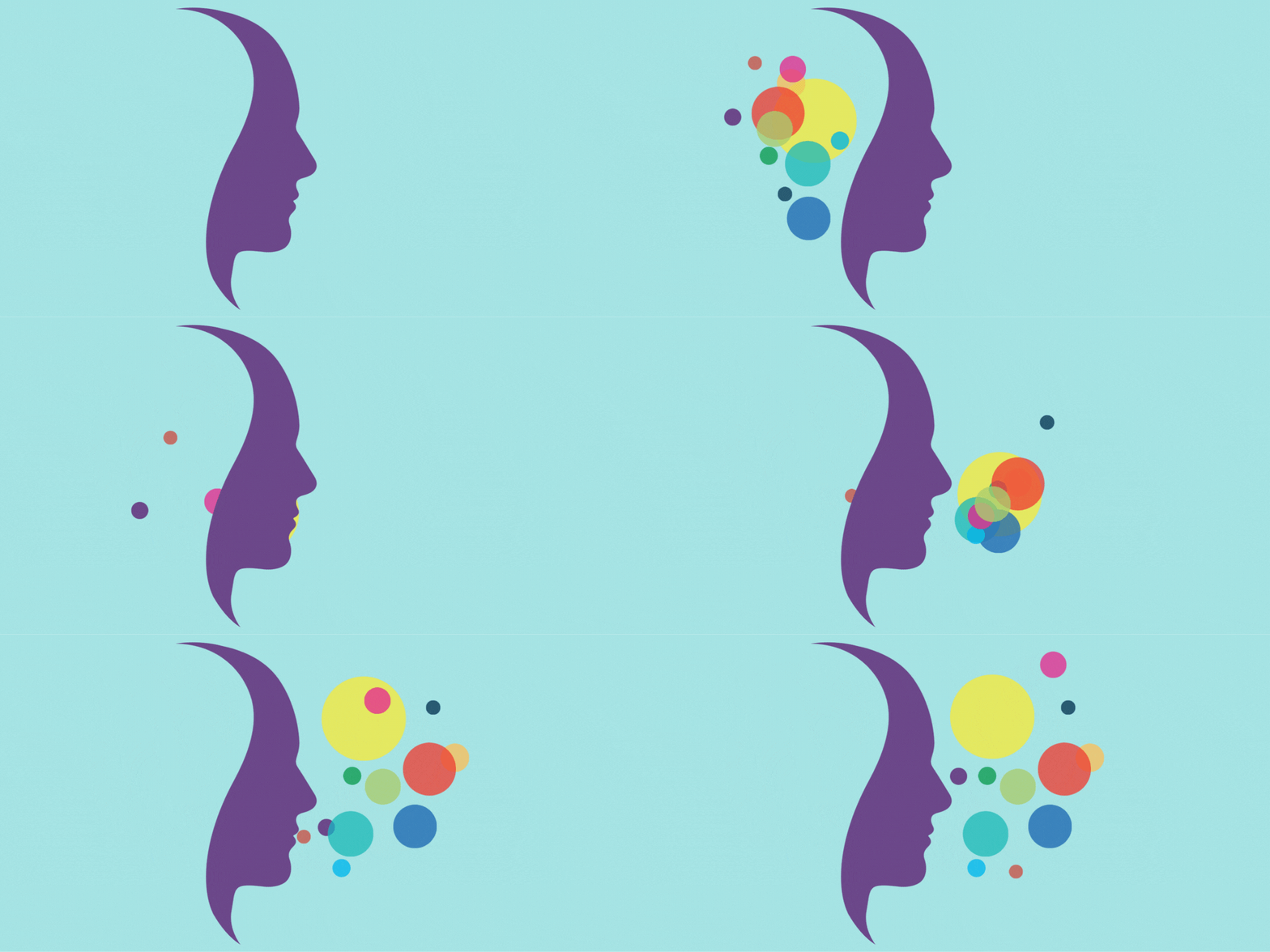
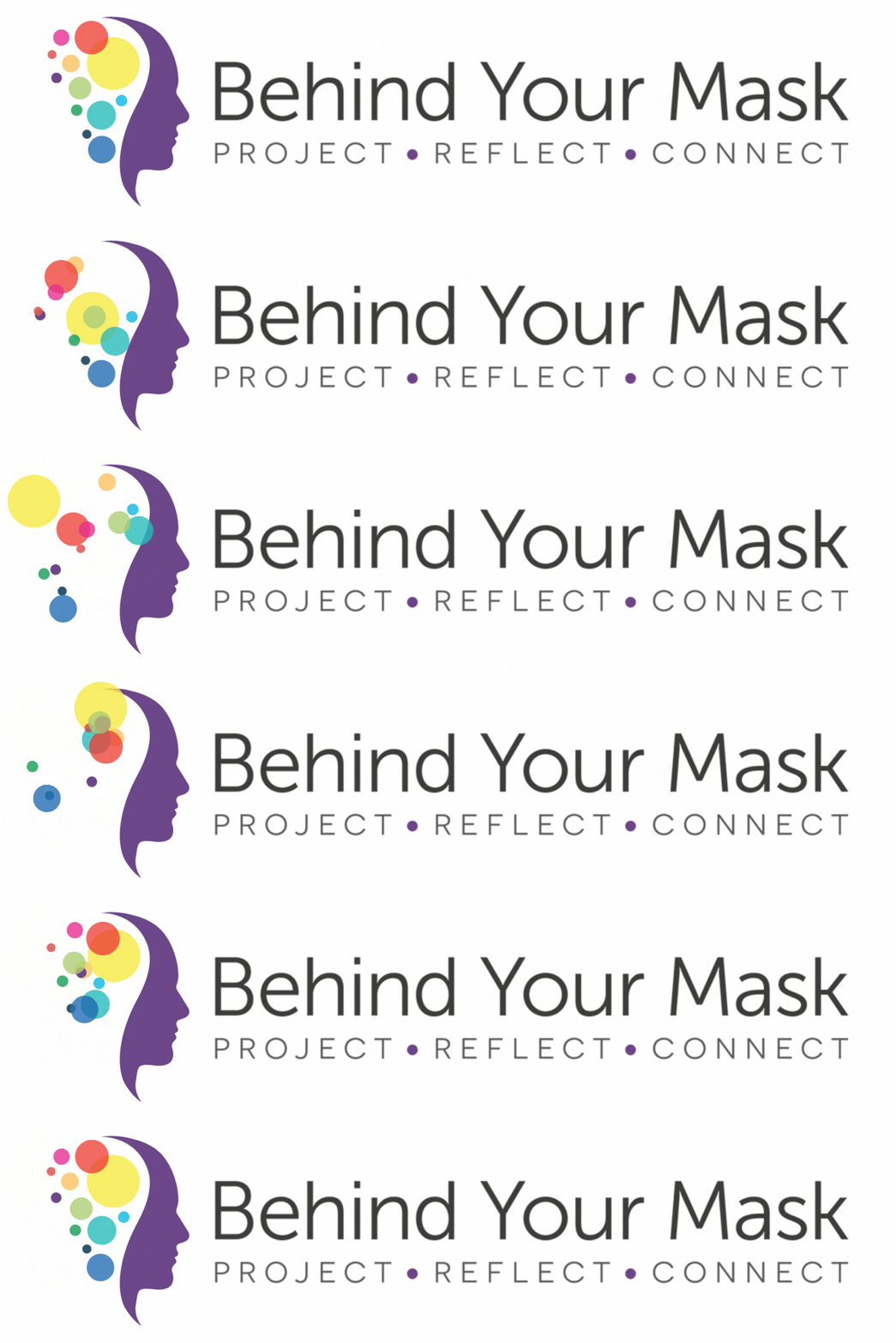
Whether it is a job title (e.g. teacher) or demographic status (e.g. mother) we are often seen in one colour or one dimension. In the Behind Your Mask logo, this is represented by the plain purple mask.
The coloured circles behind the monochrome mask represent our myriad of human stories, our multi-dimensions, our truths.
When we share and reveal our true stories, we are transformed from one-dimension monochrome to a multi-dimensional colourful tapestry of life. We become more relatable. We become more human.
You are like a colourful flower...

Although I chose purple and gold as the two main colours of Behind Your Mask in homage to the national flower of Sri Lanka, they also happen to be the colours of University College London’s Students' Union where I cut my teeth in representing and advocating for the welfare of others as a student sabbatical officer.
I chose the colours of a flower as I like the quote from another Disney film, Mulan: the flower that blooms in adversity is the rarest and most beautiful of all. We are like flowers. Storytelling for individuals, teams, and communities can provide the right environment for us to bloom, despite the adversity surrounding us.
I passionately believe that sharing and celebrating our true personal stories is the way to achieve this. It has helped me in both my own personal and professional journey. Sometimes it can be useful to get behind or drop our masks and be the characters we truly are, even if it is only for a short while.

The solution to all problems is improving and upgrading human connections...
The strapline for Behind Your Mask (Project Reflect Connect) summarizes the power of storytelling. When someone projects their story and feelings, they themselves reflect on what they have said. When you hear someone else’s story, there is a degree of resonance and reflection on your own experience.
This process of projection and reflection between people ultimately creates connection between storytellers and their listeners.

Stories are medicine.
Stories are healing.
Stories are powerful.
They have the power to engage, to educate, and to inspire.
So whether it is for yourself, work colleagues, or your friends and family, come and discover the power of stories to reconnect us to ourselves and each other in this time of great disconnect.
#ProjectReflectConnect
As seen/heard in...




















You're hiding behind a mask...and I've got the love you need to see you through...
Discover how storytelling could work for you, your team, your business, your community, or your loved ones.
Book a no-obligation, free, 30-minute discovery call and find out how I can help you harness the power of your personal stories.